
Top Blazor Development Companies to Consider for Your Next Project

Building modern web applications that are interactive, secure, and lightning-fast requires selecting the appropriate technology stack. For years, engineering teams looking to build rich frontend user experiences had to rely heavily on JavaScript frameworks such as React, Angular, and Vue. However, for organizations deeply embedded in the .NET ecosystem, this split introduced friction, code duplication, and the need to maintain distinct frontend and backend talent pools.
Here is where Blazor comes in handy. Microsoft’s revolutionary framework has changed how companies approach full-stack development by enabling engineers to write both client- and server-side logic in C#. As a result, businesses can build a high-performing web application with less overhead, faster time-to-market, and exceptional architectural consistency. According to the recent Built With statistics, there are “32,880 live websites using Blazor and an additional 56,331 sites that used Blazor historically”.
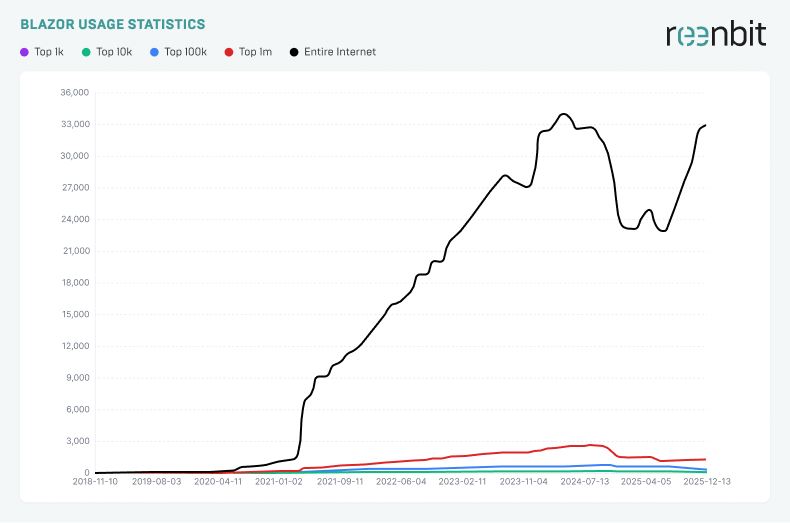
Thus, we have compiled an exhaustive guide to help you find the right Blazor development partner for your upcoming initiative. It outlines the top Blazor development companies in the market today, along with deep-dive technical insights on how to choose the ideal vendor for your specific corporate goals.
What Is Blazor Development and When Should You Use It?
Blazor is a prominent open-source web framework from Microsoft that enables engineers to assemble rich, interactive web UIs using C# instead of JavaScript. By leveraging a component-based architecture, Blazor integrates flawlessly with modern cloud solutions, enterprise databases, and robust microservices. So, when you invest in Blazor development services, you are aligning your company’s digital infrastructure with the long-term roadmap of the entire .NET technologies suite.
Why Businesses Choose Blazor for Web Application Development
The strategic decision to build Blazor applications usually boils down to architectural efficiency and operational cost reductions.
- Unified Language Stack. Developers can build full-stack web architectures entirely in C#. This eliminates the context-switching tax incurred when switching between backend C# APIs and frontend JavaScript frameworks.
- Code Sharing and Reusability. Business logic, validation rules, and data models can be shared seamlessly between the server and the client browser.
- Native .NET Performance. Applications leverage the compiled execution power of the .NET Core runtime, driving incredible efficiency for data-heavy operations.
- Enterprise Ecosystem. Blazor hooks natively into Microsoft Azure, Active Directory security protocols, Entity Framework Core, and thousands of enterprise-grade NuGet packages.
These benefits allow enterprises to slash development overhead, accelerate time-to-market, and maintain a highly unified, secure codebase across their entire digital infrastructure.
Blazor Server vs. Blazor WebAssembly: Key Differences
Understanding the underlying execution models of Blazor is vital for defining your project scope and ensuring optimal performance.
BLAZOR SERVER
BLAZOR WEBASSEMBLY
[ Client Browser ] ← SignalR (WebSockets) →
[ Cloud/Server ]
* Renders UI on Server
* Low initial load
* Needs constant connection
[ Client Browser (Runs .NET via Wasm Localled) ]
* Renders on Client
* Rich offline support
* Higher initial load
BLAZOR SERVER
[ Client Browser ] ← SignalR (WebSockets) →
[ Cloud/Server ]
* Renders UI on Server
* Low initial load
* Needs constant connection
BLAZOR WEBASSEMBLY
[ Client Browser (Runs .NET via Wasm Localled) ]
* Renders on Client
* Rich offline support
* Higher initial load
- Blazor Server. In this framework, the application runs directly on the server. The client-side browser receives a lightweight download and processes UI updates through a persistent real-time SignalR connection (WebSockets). This translates to an incredibly fast initial load time and keeps all intellectual property and heavy calculations securely within the corporate firewall.
- Blazor WebAssembly. Often abbreviated as Wasm, Blazor WebAssembly executes client-side logic right inside the user’s browser using WebAssembly. The entire application, including the compact .NET runtime, is compiled down and running locally. This makes it ideal for building progressive web applications (PWAs) that require offline functionality, low server utilization, and high-fidelity local rendering.
Therefore, businesses can strategically deploy Blazor Server for secure, low-latency internal tools or leverage Blazor WebAssembly to deliver scalable, offline-capable client applications.
Common Use Cases for Blazor Applications
Although Blazor can technically power any modern web presence, it excels remarkably well in the following scenarios:
1. Enterprise Dashboards & Internal Portals. Ideal for heavy-duty analytics dashboards, internal ERPs, and complex CRM interfaces where rapid data binding and robust security are non-negotiable.
2. Legacy Modernization Projects. Perfect for organizations looking to migrate older Silverlight, Windows Forms, WPF, or ASP.NET Web Forms solutions into modernized, web-accessible architectures.
3. Real-Time Collaborative Utilities. Exceptional for building data streaming portals, collaborative workflow tools, and live tracking boards that take advantage of Blazor Server’s persistent connection infrastructure.
Aligning your project with such scenarios ensures your team maximizes Blazor’s strengths in security, data density, and real-time connectivity. This may help your company deliver the highest possible business value.
How We Selected the Top Blazor Development Companies
Firstly, we examined dozens of vendors on the market against five rigid pillars of operational and technical excellence. Such a step allowed separating many generic agencies from true engineering specialists. The resulting list ensures your chosen one brings deep competence.
Blazor and .NET Expertise
True proficiency requires more than knowing basic C# syntax. Our top partners for you have deep-rooted capabilities across historical .NET versions and the latest releases. Moreover, they possess a deep knowledge of advanced asynchronous programming, SignalR circuit optimization, and WebAssembly state management.
Experience with Enterprise Web Applications
Enterprise-level systems feature distinct complexities: massive multi-tenant data schemas, high simultaneous traffic loads, and cross-platform integrations. Thus, we prioritized agencies possessing an extensive history of building highly durable, secure, and scalable web applications for enterprise clients.
Industry Knowledge and Case Studies
A development firm cannot build an impactful product without context. The best vendors demonstrate specialized knowledge across specific domains. They provide a vast portfolio and case studies to detail how they resolved unique regulatory, technical, and data bottlenecks for their customers.
Team Seniority and Delivery Capabilities
We analyzed the internal engineering distribution of these firms. Here, we favored agencies that maintain a high ratio of senior engineers, solutions architects, and certified Microsoft specialists. Their strong delivery capability also hinges on the mature quality assurance process and structured DevOps practices.
Client Reviews, Portfolio, and Market Reputation
Independent verification matters. Keeping that in mind, we analyzed verified client testimonials across Clutch, GoodFirms, and IT directories. Thus, we filtered potential vendors for your company based on specific criteria, such as transparent communication, strict adherence to deadlines, and high overall value for the cost.
Top 10 Blazor Development Companies
Here is our curated, definitive list of the top Blazor development companies to consider for your next major engineering project.
1. Reenbit
Founded: 2018
Company size: 100+ employees
Best for: Scale-ups and enterprise organizations seeking elite Microsoft-certified engineering teams for complex cloud-native architectures, legacy front-end modernization, and data-intensive Blazor implementations.
Reenbit is an experienced Blazor development company highly specialized in cloud-native software engineering with a team of over 100+ vetted technical experts. As an official Microsoft Solutions Partner, Reenbit has earned a perfect 5-star rating on Clutch for its strong focus on technical transparency and high-performance delivery.
Core capabilities
- End-to-end web application development
- Custom software development services
- Cloud migration (Azure)
- Business intelligence (BI) & Big Data engineering
- AI/ML integrations
- Specialized API development
Typical projects / use cases
- Building up-to-date enterprise SaaS platforms
- Migrating fragile legacy desktop software into secure Blazor web apps
- Constructing high-frequency real-time analytics dashboards
- Developing automated cloud-backed enterprise solutions
Engagement model
- Dedicated Development Teams
- Staff Augmentation
- Full-Cycle Product Outsourcing
Notable strengths
- Extremely high engineering standards, with over 88% of tech staff fully certified
- Unmatched depth in the Microsoft Azure ecosystem
- Completely transparent development workflows
- A proven track record of helping clients achieve massive time-and-cost savings
Potential limitations
- A relatively small firm compared to other large global technology vendors.

2. Emergent Software
Founded: 2015
Company size: ~100 employees
Best for: Mid-market businesses looking for a localized, long-term US-based development partner with immense depth in the Microsoft technology stack.
Based in the US, Emergent Software is a premier certified Microsoft partner that delivers quality full-stack software development services tailored to modern business ecosystems.
Core capabilities
- Custom software development
- Website creation
- Cloud transformation
- SQL database engineering
- Blazor UI architecture
Typical projects / use cases
- Corporate workflow optimization
- Cloud infrastructure modernizations
- Responsive client-facing web portals
Engagement model
- Managed IT Services
- Dedicated Engineering Teams
- Time & Materials
Notable strengths
- Deep local consulting capabilities
- Exceptional focus on database architecture
- A long history as a trusted Microsoft-certified entity
Potential limitations
- Their premium onshore pricing structure may be cost-prohibitive for early-stage startups.

3. BairesDev
Founded: 2009
Company size: 4000+ employees
Best for: Large enterprises requiring rapid scale, flexible engagement models, and massive talent pools operating within Western time zones.
As a fast-growing nearshore software outsourcing company, BairesDev provides high-quality software engineering teams by hiring the top 1% of tech talent across Latin America.
Core capabilities
- Fast-cycle staff augmentation
- Full-stack application development
- QA automation
- UI/UX design
Typical projects / use cases
- Enterprise-wide system upgrades
- Multi-platform applications
- Scaling internal development operations
Engagement model
- Staff Augmentation
- Dedicated Teams
- Software Development Outsourcing
Notable strengths
- High speed in team scaling and onboarding
- Wide technology stack versatility
- Robust coverage across multiple time zones
Potential limitations
- Large-scale cross-functional teams require structured internal management on the client’s side to avoid alignment drift.

4. Inspeerity
Founded: 2018
Company size: 350+ employees
Best for: European enterprises looking for a close-proximity nearshore team with deep analytical talent and a culture of transparent delivery.
Headquartered in Poland, Inspeerity delivers highly articulate software engineering services, with a core focus on honesty, flexibility, and architectural excellence.
Core capabilities
- .NET Core backend systems
- Blazor WebAssembly implementations
- Custom ERP adjustments
- Legacy migration
Typical projects / use cases
- Heavy industrial automation dashboards
- Multi-tenant B2B portals
- Complex integrations with existing systems
Engagement model
- Dedicated Teams
- Extended Development Centers
Notable strengths
- High concentration of senior engineering profiles
- Robust cultural alignment with Western markets
- Strong Agile lifecycle governance
Potential limitations
- Smaller global footprint compared to massive international outsourcing conglomerates.

5. Sigma Software Group
Founded: 2002
Company size: 2100+ employees
Best for: Global enterprises requiring comprehensive digital transformation projects, multi-tiered architecture setups, and high-level R&D capabilities.
Sigma Software Group is a premier, large-scale technology consulting and software engineering provider with delivery centers spanning Europe, the Americas, and beyond.
Core capabilities
- Advanced IT consulting services
- Big Data systems
- Custom web app generation
- Cybersecurity configurations
- AI solutions
Typical projects / use cases
- Complex FinTech transaction frameworks
- Telecommunication dashboards
- Large-scale manufacturing software suites
Engagement model
- Fixed-Price
- Dedicated Teams
- R&D Lab Collaborations
Notable strengths
- Immense global infrastructure
- Specialized industry laboratories
- Deep competency in navigating highly regulated sectors
Potential limitations
- The vast organizational layout may feel overly structured or bureaucratic for small, Agile startups requiring immediate day-to-day changes.
6. Orient Software
Founded: 2005
Company size: 350+ employees
Best for: Organizations seeking cost-effective, highly reliable offshore development services without sacrificing engineering discipline or code quality.
Established and located in Vietnam, Orient Software has grown into a dominant offshore software powerhouse focused on delivering high-value tech talent to global companies.
Core capabilities
- Web and mobile app development
- Artificial intelligence setups
- Specialized .NET software training
- Blazor interface design
Typical projects / use cases
- Minimum Viable Products (MVPs)
- Web-based e-Commerce environments
- Standardized back-office corporate apps
Engagement model
- Offshore Software Development Centers (ODCs)
- Staff Augmentation
Notable strengths
- Unbeatable cost-to-quality ratio
- Exceptionally mature scaling frameworks
- Highly disciplined Agile Scrum operations
Potential limitations
- Time zone deltas require careful planning when scheduling synchronous standup meetings.

7. Cleveroad
Founded: 2011
Company size: 130+ employees
Best for: Businesses requiring end-to-end product development paired with high-fidelity UI/UX design and fluid cross-platform interoperability.
Cleveroad is a highly competent Agile software company specializing in custom full-stack solutions that solve complex corporate challenges for startups and growing brands.
Core capabilities
- Web application development
- Continuous integration setups
- Cloud architecture optimization
- Custom mobile apps
Typical projects / use cases
- Logistics tracking management networks
- Healthtech compliance applications
- Interactive marketplaces
Engagement model
- Dedicated Team
- Time & Materials
- Fixed Price
Notable strengths
- Outstanding communication clarity
- Highly adaptive product discovery phase
- Great user experience modeling
Potential limitations
- Peak utilization periods can occasionally cause minor resource constraints when expanding teams on short notice.

8. Digis
Founded: 2015
Company size: 200+ employees
Best for: Technical scale-ups requiring rapid deployment of highly qualified specialists with niche technical skills.
Digis is a premium, strategic software development firm backed by the global Fiverr ecosystem, known for building highly complex systems through precise team mapping.
Core capabilities
- Custom software creation
- Front-end optimization
- Legacy system refactoring
- Automated testing services
Typical projects / use cases
- High-load FinTech applications
- Complex booking engines
- Cross-departmental administrative panels
Engagement model
- Smart Staff Augmentation
- Dedicated Agile Product Teams
Notable strengths
- Proprietary vetting and matching systems
- Exceptional responsiveness
- Direct access to niche development capabilities
Potential limitations
- Fast-paced project structures require crisp client documentation to maximize immediate velocity.
9. Vilmate
Founded: 2012
Company size: 150+ employees
Best for: Small to mid-market companies seeking a tight-knit, collaborative development partner that integrates completely with their internal team culture.
Vilmate is a boutique software engineering firm based in Europe, offering highly reliable, transparent, and personalized custom software development services.
Core capabilities
- Full-stack development
- .NET Core backends
- Interactive web apps
- Targeted quality assurance (QA) testing
Typical projects / use cases
- Single-page enterprise web applications
- Data migration systems
- Content management platforms
Engagement model
- Dedicated Development Teams
Notable strengths
- Flat organizational structure
- Quick executive decision-making
- Excellent talent retention rates
- High cost-effectiveness
Potential limitations
- Limited bench capacity for massive, enterprise-wide resource ramps within a multi-week window.

10. Geniusee
Founded: 2017
Company size: 250+ employees
Best for: Innovative startups and mid-market organizations seeking a mix of strategic business consulting alongside specialized software development.
Geniusee is a dynamic, highly certified tech consulting and development firm focused on engineering smart digital products that accelerate overall business growth.
Core capabilities
- Product discovery
- AWS/Azure cloud implementations
- Artificial intelligence modeling
- Modern web frameworks execution
Typical projects / use cases
- EdTech learning ecosystems
- Dynamic FinTech portals
- High-performance analytical tools
Engagement model
- Dedicated Teams
- Project-Based Outsourcing
- Support & Maintenance
Notable strengths
- Pervasive focus on actual business strategy and ROI metrics
- Certified cloud credentials
- Rich Agile innovation paradigms
Potential limitations
- Their deep emphasis on product strategy makes them less suitable for companies looking for mindless code writing.
Comparison of the Best Blazor Development Companies
To streamline your vendor selection, the tables below compare the aforementioned top Blazor development companies based on critical business operational criteria.
By Services
This breakdown illustrates each vendor’s technical capabilities. The table maps out those handling full-cycle builds and those specializing in targeted modernization or team scaling.
Company
Full-Cycle Product Development
Legacy Migration
Cloud Consulting & DevOps
Staff Augmentation
Reenbit
 Yes
Yes
Elite
Yes (Azure Specialist)
Yes (Azure Specialist)
Emergent Software
Yes
Yes
Yes
Yes (Azure Specialist)
BairesDev
 No
No
Yes
No
Yes (Azure Specialist)
Inspreerity
Yes
Yes
Yes
Yes (Azure Specialist)
Sigma Software Group
Yes
Yes
Yes
Yes (Azure Specialist)
Orient Software
Yes
No
No
Yes (Azure Specialist)
Cleveroad
Yes
Yes
Yes
Yes (Azure Specialist)
Digis
Yes
Yes
Yes
Yes (Azure Specialist)
Vilmate
Yes
Yes
No
Yes (Azure Specialist)
Geniusee
Yes
Yes
Yes
Yes (Azure Specialist)
Reenbit
Full-Cycle Product Development: Yes
Legacy Migration: Elite
Cloud Consulting & DevOps: Yes (Azure Specialist)
Staff Augmentation: Yes (Azure Specialist)
Emergent Software
Full-Cycle Product Development: Yes
Legacy Migration: Yes
Cloud Consulting & DevOps: Yes
Staff Augmentation: Yes (Azure Specialist)
BairesDev
Full-Cycle Product Development: No
Legacy Migration: Yes
Cloud Consulting & DevOps: No
Staff Augmentation: Yes (Azure Specialist)
Inspreerity
Full-Cycle Product Development: Yes
Legacy Migration: Yes
Cloud Consulting & DevOps: Yes
Staff Augmentation: Yes (Azure Specialist)
Sigma Software Group
Full-Cycle Product Development: Yes
Legacy Migration: Yes
Cloud Consulting & DevOps: Yes
Staff Augmentation: Yes (Azure Specialist)
Orient Software
Full-Cycle Product Development: Yes
Legacy Migration: No
Cloud Consulting & DevOps: No
Staff Augmentation: Yes (Azure Specialist)
Cleveroad
Full-Cycle Product Development: Yes
Legacy Migration: Yes
Cloud Consulting & DevOps: Yes
Staff Augmentation: Yes (Azure Specialist)
Digis
Full-Cycle Product Development: Yes
Legacy Migration: Yes
Cloud Consulting & DevOps: Yes
Staff Augmentation: Yes (Azure Specialist)
Vilmate
Full-Cycle Product Development: Yes
Legacy Migration: Yes
Cloud Consulting & DevOps: No
Staff Augmentation: Yes (Azure Specialist)
Geniusee
Full-Cycle Product Development: Yes
Legacy Migration: Yes
Cloud Consulting & DevOps: Yes
Staff Augmentation: Yes (Azure Specialist)
By Industry Focus
This table shows where the providers hold the deepest domain knowledge, helping you align with a partner who understands your market’s legal landscapes and operational challenges.
Company
Dominant Verticals
Secondary Target Sectors
Reenbit
Retail, E-commerce, Professional Services, Healthcare Tech
Manufacturing sectors, High-Tech SaaS
Emergent Software
Real Estate, Manufacturing, Professional Services
Financial, Non-Profit
BairesDev
FinTech, Healthcare, Telecommunications
Automotive, Technology
Inspreerity
Industrial Automation, Logistics, Corporate Services
Media, Supply Chain
Sigma Software Group
Telecommunications, FinTech, Automotive
Aviation, Healthcare
Orient Software
E-Commerce, Education, Corporate IT
Hospitality, Startups
Cleveroad
Supply Chain & Logistics, Healthcare, FinTech
Agriculture, Retail
Digis
FinTech, Healthcare, Human Resources
Retail, Travel
Vilmate
E-Commerce, Retail, Financial Services
Real Estate, Technology
Geniusee
EdTech, FinTech, Retail
Real Estate, Cybersecurity
Reenbit
Dominant Verticals: Retail, E-commerce, Professional Services, Healthcare Tech
Secondary Target Sectors: Manufacturing sectors, High-Tech SaaS
Emergent Software
Dominant Verticals: Real Estate, Manufacturing, Professional Services
Secondary Target Sectors: Financial, Non-Profit
BairesDev
Dominant Verticals: FinTech, Healthcare, Telecommunications
Secondary Target Sectors: Automotive, Technology
Inspreerity
Dominant Verticals: Industrial Automation, Logistics, Corporate Services
Secondary Target Sectors: Media, Supply Chain
Sigma Software Group
Dominant Verticals: Telecommunications, FinTech, Automotive
Secondary Target Sectors: Aviation, Healthcare
Orient Software
Dominant Verticals: E-Commerce, Education, Corporate IT
Secondary Target Sectors: Hospitality, Startups
Cleveroad
Dominant Verticals: Supply Chain & Logistics, Healthcare, FinTech
Secondary Target Sectors: Agriculture, Retail
Digis
Dominant Verticals: FinTech, Healthcare, Human Resources
Secondary Target Sectors: Retail, Travel
Vilmate
Dominant Verticals: E-Commerce, Retail, Financial Services
Secondary Target Sectors: Real Estate, Technology
Geniusee
Dominant Verticals: EdTech, FinTech, Retail
Secondary Target Sectors: Real Estate, Cybersecurity
By Team Size or Engagement Model
This final matrix compares organizational scale, contractual structures, and geographical locations. Thus, you can ensure their operational setup aligns with your corporate culture and sourcing strategy.
Company
Core Team Size
Primary Engagement Models
Geographical Footprint
Reenbit
100+ employees
Dedicated Teams, Staff Augmentation, Full Project
Europe, North America
Emergent Software
~100 employees
Managed Services, Time & Materials
North America, Europe
BairesDev
4000+ employees
Staff Augmentation, Outsourced Software Teams
Latin America, North America, Europe
Inspreerity
350+ employees
Dedicated Teams, Extended Engineering Centers
Europe
Sigma Software Group
2100+ employees
Fixed Price, Dedicated Teams, Tech Consulting
Global
Orient Software
350+ employees
Offshore Software Centers, Staff Augmentation
North America, Europe, Asia-Pacific
Cleveroad
130+ employees
Dedicated Teams, Time & Materials
Europe, North America
Digis
200+ employees
Smart Staff Augmentation, Product Teams
Europe, North America, Latin America
Vilmate
150+ employees
Dedicated Development Teams
Europe, North America
Geniusee
250+ employees
Product Teams, Fixed Outlines, Strategy Consulting
Europe, North America
Reenbit
Core Team Size: 100+ employees
Primary Engagement Models: Dedicated Teams, Staff Augmentation, Full Project
Geographical Footprint: Europe, North America
Emergent Software
Core Team Size: ~100 employees
Primary Engagement Models: Managed Services, Time & Materials
Geographical Footprint: North America, Europe
BairesDev
Core Team Size: 4000+ employees
Primary Engagement Models: Staff Augmentation, Outsourced Software Teams
Geographical Footprint: Latin America, North America, Europe
Inspreerity
Core Team Size: 350+ employees
Primary Engagement Models: Dedicated Teams, Extended Engineering Centers
Geographical Footprint: Europe
Sigma Software Group
Core Team Size: 2100+ employees
Primary Engagement Models: Fixed Price, Dedicated Teams, Tech Consulting
Geographical Footprint: Global
Orient Software
Core Team Size: 350+ employees
Primary Engagement Models: Offshore Software Centers, Staff Augmentation
Geographical Footprint: North America, Europe, Asia-Pacific
Cleveroad
Core Team Size: 130+ employees
Primary Engagement Models: Dedicated Teams, Time & Materials
Geographical Footprint: Europe, North America
Digis
Core Team Size: 200+ employees
Primary Engagement Models: Smart Staff Augmentation, Product Teams
Geographical Footprint: Europe, North America, Latin America
Vilmate
Core Team Size: 150+ employees
Primary Engagement Models: Dedicated Development Teams
Geographical Footprint: Europe, North America
Geniusee
Core Team Size: 250+ employees
Primary Engagement Models: Product Teams, Fixed Outlines, Strategy Consulting
Geographical Footprint: Europe, North America
What Services Do Blazor Development Companies Usually Provide?
A dedicated Blazor development company offers an array of professional services engineered to shepherd your interactive web applications through their complete lifecycle.
FULL-CYCLE BLAZOR SERVICES
Strategy & Discovery → Custom Blazor App Engineering →Legacy App Migration to Wasm → Continuous Support & CI/CD
1. Strategy & Discovery
2. Custom Blazor App Engineering →
3. Legacy App Migration to Wasm →
4. Continuous Support & CI/CD
1. Strategy & Discovery
2. Custom Blazor App Engineering →
3. Legacy App Migration to Wasm →
4. Continuous Support & CI/CD
- Custom Blazor Application Engineering. Constructing bespoke, reactive single-page applications (SPAs) or progressive web applications from the ground up using clean, testable architecture.
- Legacy App Migration & Modernization. Transforming archaic Silverlight, desktop WPF, or aging ASP.NET solutions into high-performance web applications using Blazor Server or WebAssembly, preserving years of core backend business logic.
- Blazor Hybrid Development. Leveraging frameworks like .NET MAUI alongside Blazor to build cross-platform mobile apps and desktop configurations using a singular web code footprint.
- Enterprise Integration and API Development. Architecting highly secure middleware integrations, RESTful communication layers, and enterprise service bus setups. This helps connect your Blazor frontends with underlying historical databases or modern ERP platforms.
- Performance Optimization and Auditing. Reviewing active Blazor setups to systematically refactor SignalR connection circuits, streamline WebAssembly payload footprints, and optimize browser caching routines.
- Staff Augmentation Services. Providing highly trained C# and .NET engineers to instantly inject deep technical capabilities directly into your existing in-house engineering team.
By partnering with a vendor that offers such capabilities, you ensure
your software remains scalable, secure, and fully optimized from the initial
discovery through long-term support.
Success Stories from Reenbit as A Blazor Development Company
The following real-world case studies show how Reenbit deploys Blazor to solve complex data, automation, and scalability challenges for global clients. By reviewing these actual production deployments, you can see how the framework’s theoretical advantages transform into measurable operational success.
Accelerating Analytics Delivery for Consulytic via Governed AI Pipelines
Reenbit partnered with Dutch consultancy Consulytic to build a production-grade analytics platform integrated with Microsoft Dynamics 365. Here, we utilized Blazor to ensure seamless communication with the .NET Core runtime. By wrapping the engineering cycle in an innovative, AI-assisted BMAD development framework, our team eliminated traditional infrastructure lag and established a clean API boundary between the systems. Such a specialized approach helped optimize full-stack efficiency, cut feature cycle times threefold while delivering a secure, highly maintainable cloud platform.
Transforming U.S. Retail Operations with Embedded Fabric Analytics
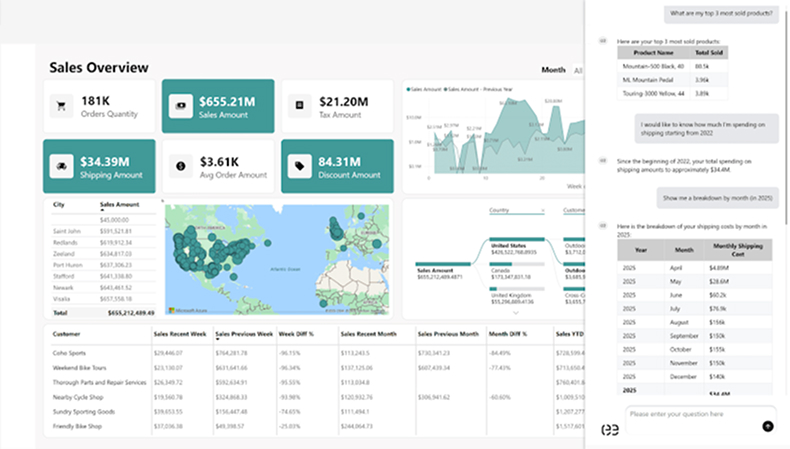
To unify a fragmented data ecosystem for a major U.S. retailer, Reenbit built a centralized data warehouse on Microsoft Fabric. Besides, we embedded interactive Power BI reports directly into the client’s custom Blazor web application. Leveraging Blazor’s reactive components and Azure AD, the team implemented strict row-level security, enabling 50+ external partners to safely access regional metrics without data leaks. The high-performance system integrated an Azure OpenAI chatbot for natural language queries. That was crucial for eliminating reporting bottlenecks and slashing manual data compilation time by 70%.
Pioneering Virtual Collaboration with an AI-Powered Near Real-Time Chat MVP
Reenbit engineered a secure, cloud-native chat-and-video collaboration MVP for a U.S. startup. We leveraged Blazor to build a reactive user interface capable of managing real-time data streaming and complex user states. Our engineering team
integrated OpenAI’s Assistants API to power an intelligent AI copilot and a custom retrieval-augmented generation (RAG) pipeline directly within the frontend. With Blazor’s architecture, we enabled a granular permissions framework. That allowed users to safely partition their personal knowledge bases across separate chat groups, which boosted user engagement by 30%.
Modernizing Enterprise Work Scheduling for Glowi’s 10,000+ Mobile Workforce
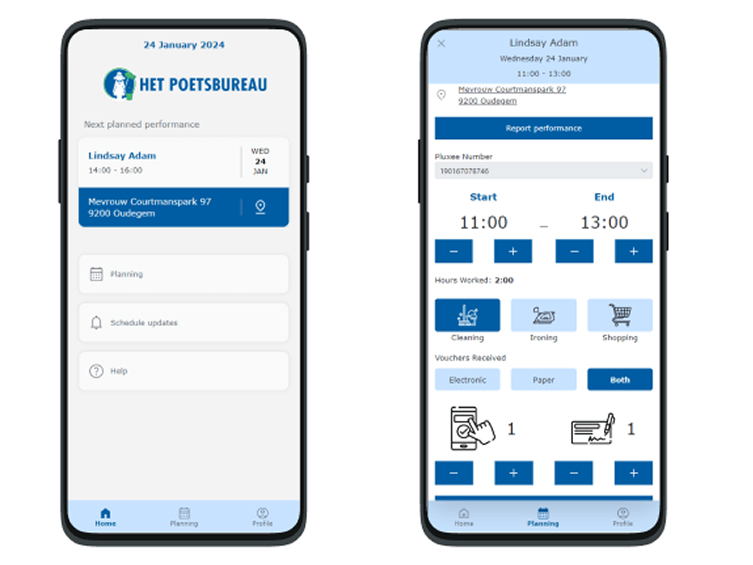
For Belgium’s largest service company, Glowi, Reenbit replaced a manual, resource-heavy consulting workflow with a high-fidelity progressive web application built on Blazor WebAssembly. The solution seamlessly integrated with Glowi’s legacy ERP data, enabling a multi-national cleaning staff of over 10 000 employees to manage
calendars, request leave, and sign official documents on mobile devices in 10+ languages. Backed by automated SMS and WhatsApp notification modules, this scalable Blazor solution eliminated back-office overhead and achieved an outstanding 86% user adoption rate.
How to Choose the Right Blazor Development Company
Selecting an outsourcing partner is among the major commitments to your
tech infrastructure. Get it wrong, and you will have missed deadlines, experience buggy deployments, and end up with a chaotic codebase you will struggle to maintain. To find a team that can actually deliver, look past the slick sales pitches and vet them using this straightforward framework.
Check Their .NET and Blazor Experience
Do not get sidetracked by typical claims of “web development expertise.” You must be sure that the vendor’s developers truly live and breathe the .NET ecosystem. Push them on the hard stuff. You should ask how they optimize asynchronous threads, manage dependency injection scopes within complex Blazor circuits, and handle state management. And all of that – without ruining application performance.
Review Similar Projects and Case Studies
A portfolio full of simple landing pages will not show the proper value. You must request detailed case studies from recent successful Blazor projects, especially those closely matching your scope. Analyze how they handled tricky UI states and managed large relational databases. Also, check the implementation of security measures to protect confidential customer data.
Evaluate Communication and Delivery Process
Even the best developers will fail your project if they operate in a black box. Thus, you need an agency that treats transparency as a core feature of the development process. Find out how they actually run their day-to-day operations. Do they use tools like Jira, Confluence, and Slack to keep you in the loop, and do they have a clear, reliable sprint review cadence?
Compare Pricing Models and Team Flexibility
Project requirements often change. Therefore, your engineering partner needs to pivot with you. Look for the one that offers flexible engagement models rather than forcing you into a rigid box. Do you need a predictable, fixed-price contract for a product discovery phase, or a scalable, dedicated development team to perform on a dynamic roadmap? First, align the setup with your financial planning.
Ask About Security, Scalability, and Long-Term Support
You should not regard enterprise web software as a “set-it-and-forget-it” project. It needs rigid security guardrails and an architecture built to grow. Make sure your candidate uses industry-standard tools to automate their continuous integration and deployment (CI/CD) pipelines. They must also run regular vulnerability
scans and provide clear post-launch maintenance plans so your app stays fully optimized when Microsoft drops its annual .NET framework updates.
Checklist: Questions to Ask Before Hiring a Blazor Development Company
When discussing your project with a potential technology vendor, move beyond traditional sales scripts. It is much better to ask some targeted technical and operational questions:
- How do you typically determine whether a client’s project scope is better served by Blazor Server or Blazor WebAssembly?
- Can you explain your approach to minimizing the initial download payload size for a large enterprise Blazor WebAssembly application?
- How does your internal quality assurance process handle state sync testing and real-time data latency tracking across diverse browsers?
- What effective strategies can your architects implement to guarantee the security of shared business models when running inside a client-side WebAssembly browser environment?
- Can you provide a case study to demonstrate how you integrated a new Blazor frontend with complex, highly sensitive existing systems or legacy mainframe APIs?
- What structural maintenance plans do you offer to help clients seamlessly transition their live Blazor applications to new .NET versions when Long-Term Support (LTS) builds drop?
These precise, architecture-focused questions ensure you can confidently filter out generic agencies and partner with a vendor that possesses true, enterprise-grade engineering depth.
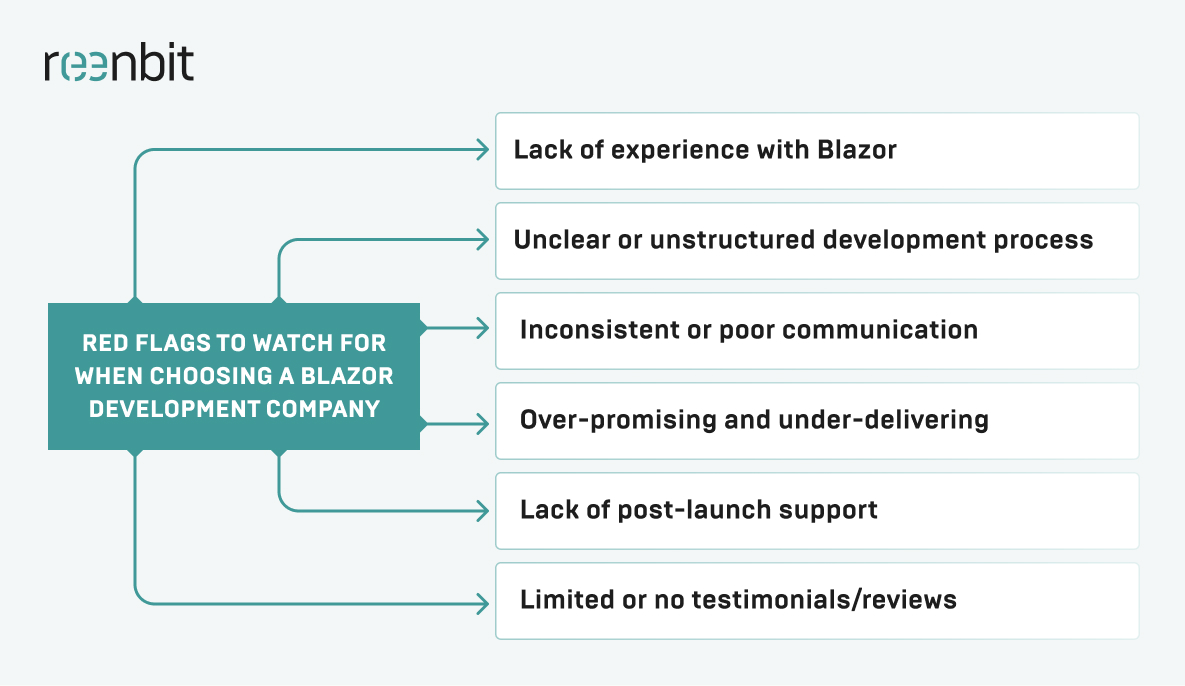
Red Flags to Watch for When Choosing a Partner
You must consider these critical warning signs during vendor negotiations. If you spot them, it is often wise to look elsewhere:
1. Overselling Blazor as a Universal Cure-All
Blazor is incredibly powerful, but it is not always the perfect tool for every single web initiative. If an agency recommends Blazor for a highly publicized, content-heavy marketing landing page that relies heavily on microsecond Search Engine Optimization (SEO) rendering, they are prioritizing their internal sales targets over sound software architecture.
2. Superficial .NET Portfolios without True Blazor Exposure
Historical software shops often complain about extensive Blazor competency, having dealt with basic backend C# code for a decade. Developing high-performance, asynchronous frontend applications requires a different state-management mindset. You should demand to check verified, live Blazor examples.
3. Complete Absence of Structured CI/CD Processes
The deployment model offered by your potential vendor may involve manual server configuration or lack a strict, automated continuous integration pipeline. This provokes an immediate risk to your software’s long-term scalability and security posture.
4. Vague or Non-Committal Quality Assurance Frameworks
High-quality enterprise applications cannot depend on developers manually clicking through pages before a production release. Thus, a complete absence of structured unit testing, automated end-to-end testing, or regression validation scripts is a major red flag for the long-term health of the codebase.
FAQ
What Is a Blazor Development Company?
A Blazor development company is a specialized technology vendor focused on building modern web applications using Microsoft’s .NET framework and C# for frontend and backend development. Traditional web agencies write backend systems in C# and shift over to independent JavaScript frameworks for UI rendering. On the other hand, with a unified language stack, a dedicated Blazor agency provides streamlined development, faster feature iteration, and clean architectural alignment.
How Much Does Blazor Development Cost?
The total cost of custom software development services may vary significantly depending on several key metrics:
- Project Complexity. A straightforward internal company dashboard can range from $15,000 to $40,000, whereas an enterprise-level SaaS ecosystem can easily exceed $100,000 to $250,000+.
- Geographical Location. Onshore US engineering talent generally runs between $150 to $250+ per hour. Meanwhile, top-tier European nearshore teams deliver technical quality on par with $50–$90 per hour.
- Engagement Length. Staff augmentation setups also fluctuate based on the specific seniority levels and technical skills required over a given month.
Is Blazor Good for Enterprise Applications?
Yes, Blazor is outstanding for enterprise applications. Because it integrates natively with the broader Microsoft ecosystem, enterprise solutions can leverage robust security components, Active Directory authentication, and scalable Azure microservices. Also, its ability to handle complex data schemas, maintain long-term code stability, and share logic directly across client and server runtimes makes it highly reliable for scale-ups and corporate environments.
Should I Choose Blazor Server or Blazor WebAssembly?
The decision depends on your application’s unique user profile and performance objectives:
- Choose Blazor Server if you are building complex internal tools, real-time data streaming engines, or applications that require protecting proprietary business logic behind a secure firewall while benefiting from instant initial load times.
- Choose Blazor WebAssembly if you want to deliver rich, offline-capable progressive web applications, aim to minimize server infrastructure costs by offloading UI rendering to the client’s browser, or if you expect a massive global user base that demands minimal server roundtrips.
How Do I Hire Blazor Developers?
When hiring top-tier Blazor developers, you must prioritize vendors with proven Microsoft-certified credentials and verified case studies. You should look for teams that:
- Demonstrate an analytical mindset during your discovery phase.
- Possess deep knowledge of modern C# optimization models.
- Offer adaptable, flexible engagement models that align with your project’s pace.
If you need a partner that fits this description perfectly, consider reaching out to Reenbit and discover how to turn your product vision into a secure, high-performance web reality.

