
Background
Our client is a public-sector organization in Northern Europe that operates a digital platform for meal planning at schools and care facilities. The platform helps parents and caregivers review menus in advance, make reservations where applicable, and track allergen-related information. Administrative users manage menus, institutions, and user access through a back-office interface.
The organization needed a modernized solution delivered under a fixed annual schedule, with a clear go-live requirement aligned with their operational calendar. Our team joined to extend internal capacity and take end-to-end ownership of delivery.
Challenges
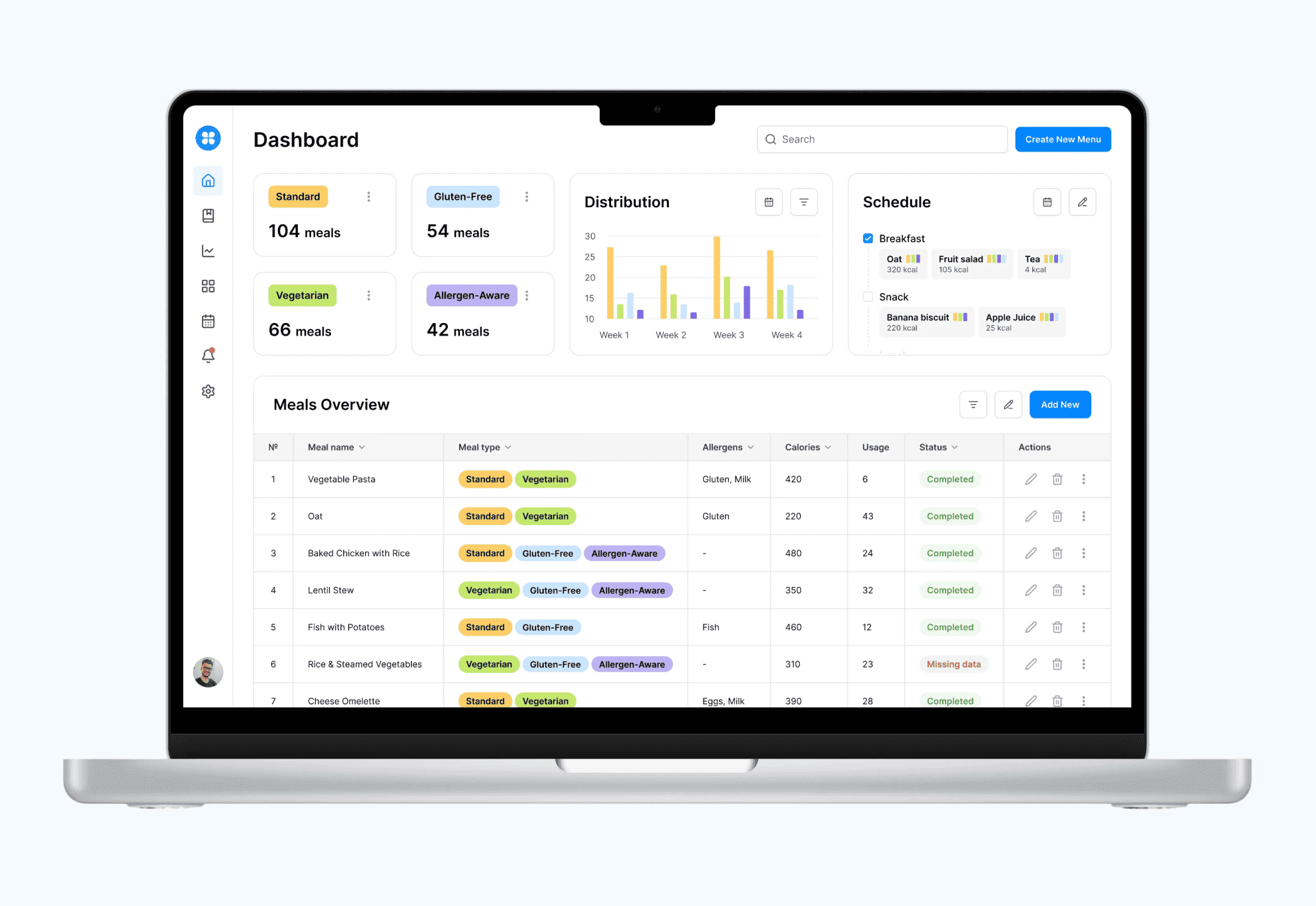
The project involved migrating legacy menu data from Umbraco, where information was inconsistent, duplicated, and often incomplete. Allergen and tag data were unstructured, making direct migration impossible without careful data cleaning and normalization.
The platform also required complex and flexible menu logic, including long-term planning, active and inactive days, multiple meals per day, menu history, and the ability to reuse menus across different schools and care facilities.
Another challenge was the lack of standardized allergen management. Allergens were previously handled manually, so a centralized system had to be designed while still allowing municipality-specific rules. All of this had to be delivered under tight deadlines, with the MVP ready before the start of the school year.
Solution
We built the platform from scratch, using the provided designs and high-level requirements as a starting point. The team focused on delivering a stable, scalable core that could support future expansion.
Key solution elements included:
- Backend architecture in which menus function as independent, reusable entities.
- Custom migration pipeline from the legacy system, including parsing, cleaning, and restructuring unorganized data.
- Flexible roles and permissions model mapped to municipalities and institutions.
- Two-stage deployment approach: a fast temporary setup for early testing and validation, followed by a stable production environment.
- Structured handover sessions to enable the client to maintain and evolve the platform confidently.
Features
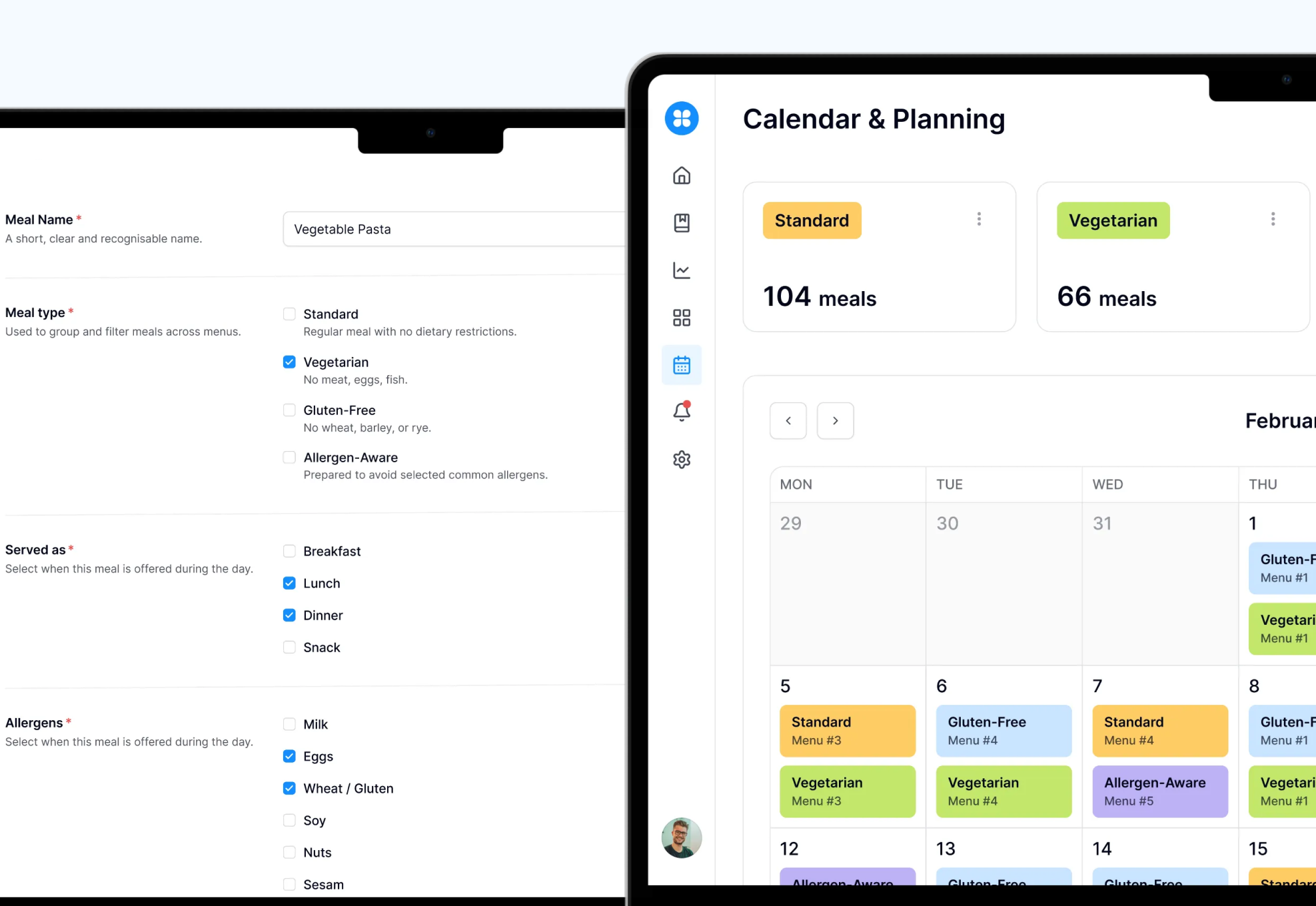
User & Access Management:
- User invitations, profile updates, and password management
- Role-based access control linked to municipalities and institutions
Menu Management:
- Weekly menu creation and long-term planning (up to a full year).
- Meal and allergen assignment per day and time of day
- Two menu-editing modes: quick selection using predefined tags and advanced free-text editing for complex scenarios
- Municipality-specific allergen lists
Institution Logic:
- Independent menus that can be assigned to multiple schools or care facilities
- “Active menu” selection per institution
- Ability to switch menus without rebuilding data
Efficiency Features:
- Menu copying, allowing institutions to reuse weekly menus across schools, is one of the most valuable features for the client.
Integrations:
- Email and notification integrations (e.g., SendGrid / Twilio-style services)
Outcome
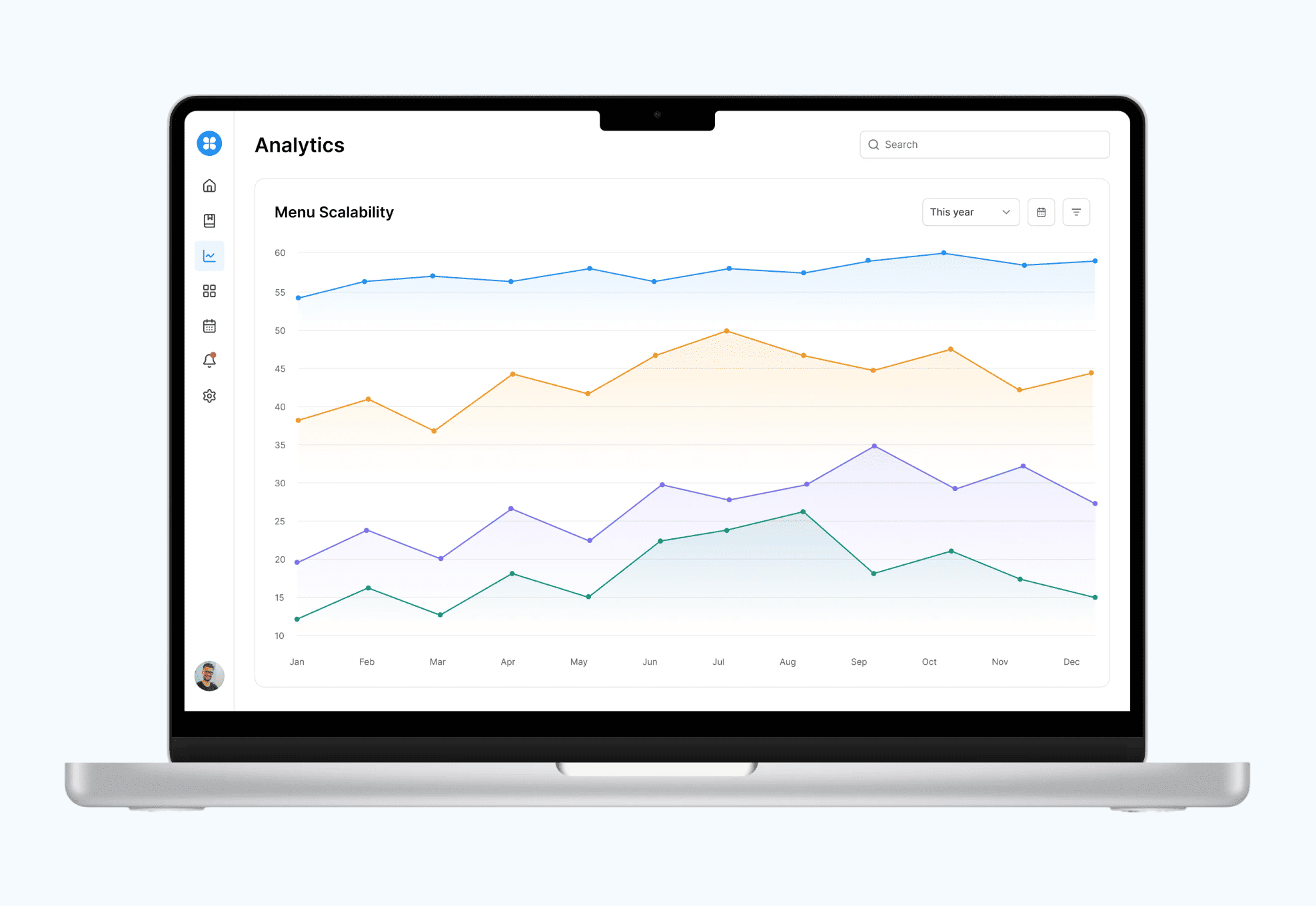
- MVP delivered in 2 months, on time for the school year
- 40–60% reduction in manual menu management for institutions
- Platform ready to support thousands of users across multiple municipalities
- Centralized, standardized allergen and menu data

